

Women’s boots work with almost any outfit when you match the boot height to your proportions. Ankle boots pair with jeans, midi skirts, and casual dresses. Knee-highs suit skirts and leggings. Thigh-highs shine with minis and oversized knits. The right pairing is simpler than it looks.
Key Takeaways
- Women’s boots fall into five main silhouettes — ankle, Chelsea, knee-high, over-the-knee, and thigh-high — and each has its own best-pairing rules.
- Proportions are everything: a taller boot needs a shorter or more fitted hem above it to avoid visual heaviness.
- Neutral tones — black, tan, cognac, brown — give the most outfit flexibility, while bold colors work best as a deliberate focal point rather than a background detail.
- Simple adjustments, like tucking slim jeans into knee-highs or pairing an oversized knit with thigh-highs, instantly make a look feel more intentional.
Why Are Women’s Boots Such a Wardrobe Essential?
Women’s boots have been a fashion constant for decades. They balance function and style in a way few other shoes manage. A good pair anchors an outfit, adds visual interest, and transitions naturally from casual to smart occasions. Unlike heels that demand a specific look, or flats that can read as low-key, boots hit a sweet spot — they carry polish without trying too hard.
The range of silhouettes matters, too. From chunky-soled ankle boots to sleek thigh-high styles, the category covers every aesthetic, every season, and every occasion. That versatility is why a well-chosen boot collection can effectively replace multiple other shoe types in your wardrobe. When you understand three core rules — height, proportion, and color — wearing any boot style confidently becomes second nature. The rest of this guide walks through each silhouette, then brings everything together with a step-by-step outfit-building process you can apply immediately.
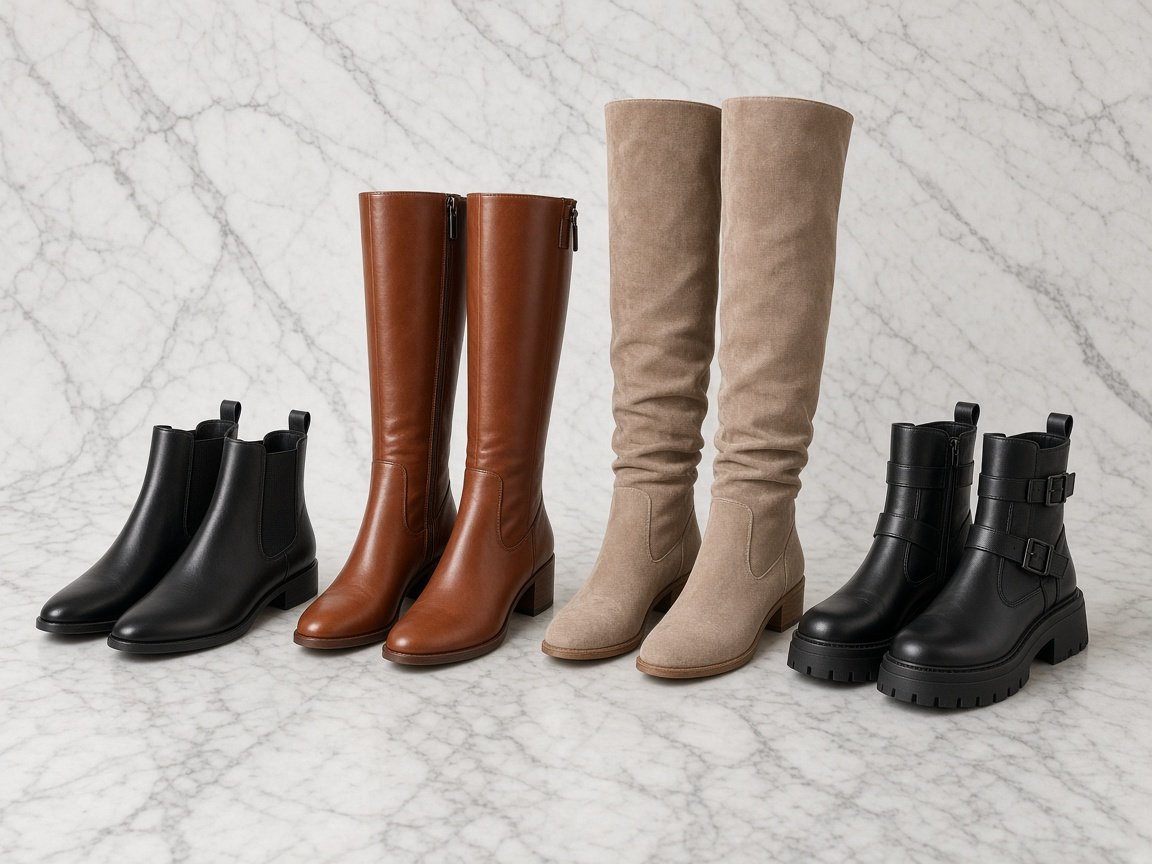
How Do You Style Ankle Boots?
Ankle boots are the most versatile boot silhouette — and arguably the easiest to wear. They hit just above or at the ankle, so they don’t significantly change the perceived length of your leg. That makes them forgiving with almost any bottom half, which is why most people reach for them first.
- Skinny or slim jeans: tuck the hem inside the shaft or let a small sliver show at the ankle — either works
- Wide-leg jeans: choose a pointed-toe ankle boot to visually elongate the leg beneath the wide hem
- Midi skirts: a small gap of bare skin or tights between the boot shaft and skirt hem creates a flattering visual break
- Mini skirts and dresses: ankle boots add a casual, grounded feel that balances a short hemline
- Shirt dresses: a heeled ankle boot elevates the whole look toward smart-casual or evening-ready territory
One common pitfall: cropped wide-leg trousers that cut right at the boot shaft can shorten the leg visually. If you love that trouser shape, opt for a pointed-toe boot and allow a touch of bare ankle to show. That small gap maintains the elongating effect. Heel height matters here too — a block heel reads casual, a slim heel dresses things up, and a flat ankle boot (like a Chelsea or mule boot) works best for daytime and relaxed outfits.
How Do You Wear Knee-High Boots?
Knee-high boots create a long, clean line from foot to knee. That looks elegant with skirts and streamlined with fitted trousers. The golden rule: keep what sits above the boot slim. Bulky layers on top make the silhouette feel heavy and visually shorten the leg — the opposite of what you want from a tall boot.
- Pair with a mini or above-the-knee skirt for a balanced, proportional look
- Tuck skinny jeans or leggings into the shaft for a sleek, unbroken line from thigh to toe
- Try them under a midi dress for a half-tucked layered effect in autumn and winter
- Avoid very wide-leg trousers — the fabric tends to bunch awkwardly at the boot top
- A heel of any height on a knee-high boot can be very flattering with fitted trousers or a pencil skirt
If you’re new to knee-high boots, black leather or black suede is the easiest entry point because it coordinates with almost everything. From there, tan or cognac brown adds warmth for autumn dressing. For a full breakdown of outfit combinations that work with this silhouette — from casual daywear to evening options — the guide on what to wear with black knee-high boots covers both directions in detail.
How Do You Pull Off Thigh-High Boots?
Thigh-high boots make a statement — but they’re more wearable than they look. The styling rule is about balance. Because the boot covers so much of the leg, the garment above it needs to be short or fitted. When you get this proportion right, the look is effortlessly confident rather than try-hard.
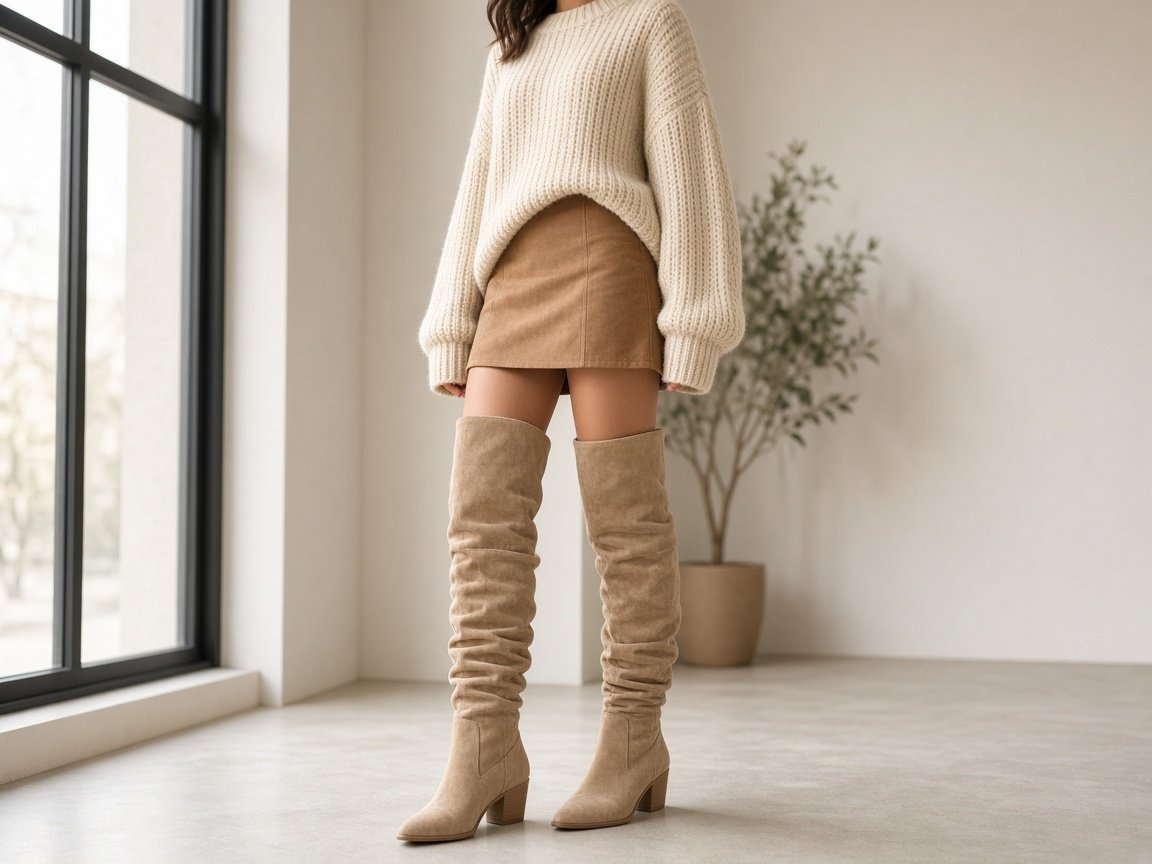
- Oversized sweaters or longline knits with just a flash of skin or mini skirt visible at the thigh — a popular formula for good reason
- Mini skirts — the classic thigh-high combination that keeps proportions sharp and intentional
- Shirt dresses belted at the waist — the belt breaks the silhouette and adds definition above the boot line
- Tailored blazers worn as dresses — an editorial approach that works surprisingly well for evenings out
The key mistake to avoid: pairing thigh-highs with long, flowy skirts or maxi dresses. The boot disappears and the silhouette reads as shapeless. Fit at the thigh also matters — a shaft that constantly gaps away from the leg or slides down disrupts the finished look. For everything from casual daywear to evening styling, the complete guide to styling thigh-high boots covers the full range of options and the most common pitfalls.
How Do You Style Over-the-Knee Boots?
Over-the-knee (OTK) boots sit above the kneecap — sometimes extending to the lower thigh. They’re closely related to thigh-highs but typically stop just above the knee rather than reaching the upper thigh. The same proportion logic applies: keep the visible section between the boot top and your hemline short and deliberate.
OTK boots pair well with mini skirts and dresses, slim-cut shift dresses, and fitted shorts for a more editorial look. They tend to feel slightly more accessible than full thigh-highs — the lower height makes the silhouette less extreme while still creating a dramatic effect. For specific outfit combinations built around black OTK styles, the guide on what to wear with black over-the-knee boots is a useful reference point with ideas across casual and dressed-up dressing.
If your OTK boots slide down during wear, stay-up strips or boot bands worn on the thigh inside the shaft help hold the position. A boot that sits cleanly at the right height looks intentional. One that constantly slides reads as an afterthought — so getting the fit right is the single biggest styling upgrade you can make with this silhouette.
How Do You Style Combat Boots?
Combat boots — chunky-soled, lace-up ankle or mid-calf styles — have crossed firmly from utility wear into mainstream fashion. Their visual weight means they look best paired with outfits that can hold their own: floral midi dresses, oversized coats, or straight-leg denim. The contrast between the chunky boot and a more feminine or relaxed piece is exactly the point.
- Floral or feminine slip dresses — the visual contrast between delicate fabric and heavy boot is well-established in street style and works because the tension feels deliberate
- Baggy straight jeans with a fitted or tucked tee — a balanced casual look where the boot’s visual weight is proportional to the wide leg
- Plaid mini skirts with a cropped or fitted jacket — a street-style-influenced combo that leans into the boot’s heritage without looking costumed
- Wide-leg cargo trousers worn slightly high-waisted so the boot sole remains visible at the hem and the full silhouette reads clearly
What to avoid: very delicate or formal fabrics like chiffon or fine silk. They tend to look like they’re competing with the boot’s weight rather than complementing it. Combat boots are naturalizers — they bring an outfit down in a good way, making everything feel more relaxed and grounded without losing the overall aesthetic you’re going for.
How Do You Wear Chelsea Boots?
Chelsea boots are defined by elastic side panels, a low to mid ankle profile, and a clean, uncluttered finish. No buckles, no zipper pulls — nothing to distract. That simplicity is what makes them so easy to dress up or down. They sit comfortably between a smart shoe and a casual boot, which is why they’re one of the most reliably versatile boots you can own.
- Slim straight jeans with a small break over the boot shaft — a timeless, effortless everyday look
- Tailored trousers for a sleek, polished office-appropriate outfit that doesn’t sacrifice comfort
- Midi skirt and turtleneck — a natural autumnal combination that works from morning through to evening
- Shirt dress for a simple smart-casual look that transitions across seasons with minimal effort
- Wide-leg trousers with a tucked-in blouse — Chelsea boots’ slim profile stops a wide leg from looking visually overwhelming at the ankle
Chelsea boots in tan or camel leather warm up monochromatic or neutral-heavy outfits. Black Chelseas sit closer to a smart dress shoe in feel — an excellent choice when you want the comfort of a boot without the visual casualness of a chunky sole. A low stacked heel adds just enough elevation to look intentional and lifts the whole outfit a notch without committing to a full heel.
How Do You Choose Boots for Your Body Type?
Boots can work beautifully on every body type. The key is using proportion to your advantage — understanding which boot height and silhouette flatters your frame, rather than following a universal rule that may not apply to you personally.
For petite frames
Pointed-toe or slim-heeled boots elongate the leg visually. Very chunky lug soles can look heavy on a smaller frame. Matching boot color to your hosiery or trousers — nude boots with nude tights, black boots with black leggings — creates an unbroken leg line that adds visual height without heels. If you’re specifically shopping for knee-highs, the curated list of best knee-high boots for petite women covers styles specifically selected for flattering shorter proportions.
For curvier or fuller-calf frames
The main practical consideration when buying knee-high or thigh-high boots is shaft circumference. Many standard-width boots are cut for a narrower calf and won’t zip comfortably on fuller legs. Always check the shaft circumference in the product specifications before buying — not just the shoe size. Look for stretch fabric panels, wide-calf labelling, or pull-on styles that naturally accommodate more variation. Heeled knee-high boots can be particularly flattering with fitted trousers or a midi skirt because the heel creates a continuous upward line. When heel height isn’t practical for the occasion, a flat but fitted shaft in a tonal color achieves the same visual effect.
What Colors and Materials Are Most Versatile?
Color choice determines how hard a boot has to work in your wardrobe. Neutral tones are the safest investment because they coordinate with the widest range of outfits and seasons. Statement colors can work very well, but they function best as a deliberate focal point rather than a background element.
| Color | Best Season | Pairs Well With |
|---|---|---|
| Black | All seasons | Everything — the single most universal boot color |
| Tan / camel | Autumn, smart-casual | Denim, neutrals, earth tones, cream |
| Cognac brown | Autumn / winter | Olive, burgundy, cream, navy, rust |
| Nude / skin-tone | All seasons | Creates a visual leg-lengthening effect with almost any outfit |
| White | Spring / summer | Denim, brights, pastels, linen separates |
| Burgundy / cherry | Autumn / winter | Black, navy, camel, grey — functions as a statement neutral |
For materials, full-grain leather or high-quality leather-look holds its shape best over time and needs the least maintenance. Suede is softer and more relaxed in feel, but needs protective spray before wearing in wet conditions. Black suede in particular strikes a useful middle ground — softer than leather, but still polished enough for dressed-up outfits. Suede boots benefit from cedar boot trees when stored, as they’re more prone to creasing than leather. Whichever material you choose, proper storage protects the shaft shape and extends the life of the boot significantly.
How Do You Build a Complete Boots Outfit: Step by Step?
A well-put-together boot outfit isn’t accidental. There’s a simple logic behind it, and once you know the sequence, it becomes quick and intuitive. Use these steps to build a cohesive look from scratch — whether you’re choosing your outfit around the boots or the other way around.
- Start with the occasion. Is this casual, smart-casual, or evening? The occasion sets the parameters for heel height, boot height, and material choice before anything else is decided.
- Choose your boot silhouette based on the hem you want to wear. Mini hem? Almost any boot height works. Midi hem? Ankle or knee-high. Trousers? Ankle or knee-high tucked in. Thigh-highs need a short hem visible above them.
- Select the bottom half first, then match the boot. It’s easier to match the boot to the trousers or skirt than to reverse-engineer an outfit around boots you’ve already committed to.
- Balance the volume above the boot. A tall fitted boot calls for something slim at the waist and hip. A chunky ankle boot can handle a wider trouser leg. The finished silhouette should read as intentional, not accidental.
- Add a topper layer last. A coat, blazer, or oversized cardigan completes the silhouette from top to bottom. Check that its hemline works with the boot height — a very long coat over thigh-high boots removes the boot from the visible outfit entirely.
- Keep accessories proportional to the boot. Heavily embellished boots need simpler accessories. Minimal boots can carry more jewelry, bags, and layering without looking overdone. When in doubt, let the boots speak for themselves.
To put the steps above into practice: imagine dressing for a smart-casual dinner (Step 1). You want to wear your black knee-high boots (Step 2: knee-high suits a mini or midi hem). You pick a fitted above-the-knee skirt (Step 3). You add a simple knit tucked in at the waist (Step 4: slim above the boot). Over the top, a tailored midi-length coat — but that covers the boot entirely. So you switch to a cropped jacket, or wear the coat open (Step 5: hemline check). Finally, simple stud earrings and a structured bag let the boot do its work (Step 6). The process takes thirty seconds once it becomes habitual.
What Should You Expect From Women’s Boot Trends Over the Next Two Years?
Based on what’s been moving through mainstream and designer fashion across 2025 and into 2026, a few directions look set to continue over the next twelve to twenty-four months.
Chunky soles are holding steady. Platform and lug-sole ankle boots have been consistent across mainstream and high-end fashion. Wider sole profiles continue to appear in both casual and smarter styles, and the silhouette has absorbed enough trend cycles to read more like a classic than a moment-specific choice. Expect them to continue evolving in material and toe shape rather than disappearing entirely.
Western shapes are moving into everyday wear. Pointed-toe cowboy boots and Western-influenced ankle styles have held strong. The look has shifted from full Western outfit territory into everyday styling. Expect continued crossover with tailored trousers, straight-leg denim, and even smarter workwear. The Western influence is now mainstream enough that it doesn’t require the full accompanying aesthetic to work as an outfit.
Quiet luxury leather remains steady. Minimal, structured leather boots in neutral tones align with the broader quiet luxury movement in fashion. High-quality leather in understated shapes tends to hold stylistic value across multiple seasons rather than dating quickly. If you’re considering investing in a core boot wardrobe piece, the best Italian leather boots for women roundup covers the most durable and stylistically enduring options available in 2026.
Frequently Asked Questions
Can you wear boots with a dress?
Yes — boots and dresses are one of the most versatile combinations in women’s fashion. Ankle boots work with almost any dress length. Knee-high boots pair best with mini and shift dresses. Thigh-high and over-the-knee boots work particularly well with mini dresses and belted shirt dresses where the hemline is short enough to show the boot shaft clearly. For specific dress styles that complement thigh-highs, the guide on what kind of dress to wear with thigh high boots covers the best combinations across styles and occasions.
How do you wear knee-high boots with jeans?
Tuck slim, skinny, or straight-leg jeans inside the boot shaft to create a clean, unbroken line from thigh to toe. Avoid tucking wide-leg jeans — the excess fabric bunches at the boot top and ruins the silhouette. If you want to wear wide-leg jeans with knee-highs, let the hem fall naturally over the shaft and choose a boot with a distinctive pointed toe so the boot still reads clearly at the ankle.
Are ankle boots still stylish in 2026?
Yes. Ankle boots continue to appear widely across high-street and designer collections in 2026 and remain a core wardrobe staple. Specific details shift seasonally — heel heights, toe shapes, sole profiles — but the ankle boot silhouette itself is durable rather than trend-dependent. Lug-sole and platform versions in particular are appearing across multiple style categories from casual to smart-casual.
How do you stop knee-high or thigh-high boots from sliding down?
The most reliable solution is wearing thicker tights, thermal leggings, or boot socks underneath — the extra material creates friction that holds the shaft in place. Boot garters (elastic bands worn around the thigh and looped to the boot top) are a more secure option for persistent slipping. Choosing the right shaft circumference for your calf size in the first place is the most effective long-term fix — a shaft that fits properly stays put on its own.
Can you wear boots in summer?
Yes, particularly ankle boots and Western-influenced styles in lighter materials. The key is pairing them with summer-weight fabrics — linen dresses, lightweight cotton midi skirts, denim shorts — to avoid the look feeling seasonally heavy. Chelsea boots in tan leather are particularly adaptable to warmer months when worn with light, breathable outfits. White ankle boots also read as a fresh summer choice when paired with denim or a simple cotton dress.
What’s the most versatile boot to own?
Black ankle boots cover the most outfit territory. They work across seasons and occasions, coordinate with everything, and require no specialist styling knowledge to wear well. A heeled or block-heel ankle boot in black leather — or quality leather-look — is the best single starting point for a boot wardrobe. From there, adding a knee-high boot in a neutral shade (black, tan, or cognac) significantly expands what you can do across both casual and dressed-up dressing.
How do you wear boots with wide-leg trousers?
The most reliable approach is to let the trouser hem fall over the boot shaft rather than tucking it in. Choose a boot with a narrow or pointed toe so the shape reads clearly beneath the wide hem — a chunky or blunt-toed boot tends to disappear. Ankle boots with a slim profile work particularly well. Very wide-leg trousers that pool at the ankle can also look good with a pointed Chelsea or low-heeled ankle boot if the trouser is hemmed to the right length.
Putting It All Together
Learning how to wear women’s boots well comes down to three things: understanding boot height, working with proportions, and building outfits in the right order. Start with the occasion, choose the boot silhouette for the hem you want, then balance from the waist up. Once that logic is in place, every boot silhouette becomes much easier to work with confidently.
If you’re building a boot wardrobe from scratch, start with black ankle boots — they cover the most ground in the fewest purchases. Add knee-highs in a neutral, then thigh-highs or OTK styles if that aesthetic appeals to you. Each silhouette has its own proportioning rules, but all of them reward the same approach: keeping hemlines intentional and silhouettes balanced from top to toe.
The bootsjunkie.com editorial team publishes in-depth guides for each boot type, so once you’ve got the basics covered, it’s worth exploring the specific silhouette that interests you most. Good boots, worn well, are one of the most rewarding wardrobe investments — they carry a look across every season and rarely go out of style.